HubSpot AI+Agentic Quote Creation

‍

Rethinking a core experience in HubSpot's Revenue Hub to accelerate seller's time-to-quote and remove friction from navigating complex quote goverenance and business rules during quote creation.

‍

I led design for these features as part of a cross-functional team including PM and engineering to ship a beta version and resolve specific customer pain points.
company
HubSpot
timeline
90 day sprint
Role
Senior product design, lead
Tools
Figma, Figjam, Claude Code, Storybook

Outcomes

  • Time-to-quote improved by more than 50% — compared with the current quote editor — in testing with beta customers
  • Beta customers reported increased confidence navigating complex business pricing rules when creating their quote, compared with the current quote editor
  • AI chat + canvas artifact pattern contributed to HubSpot's design system

The customer problem

‍

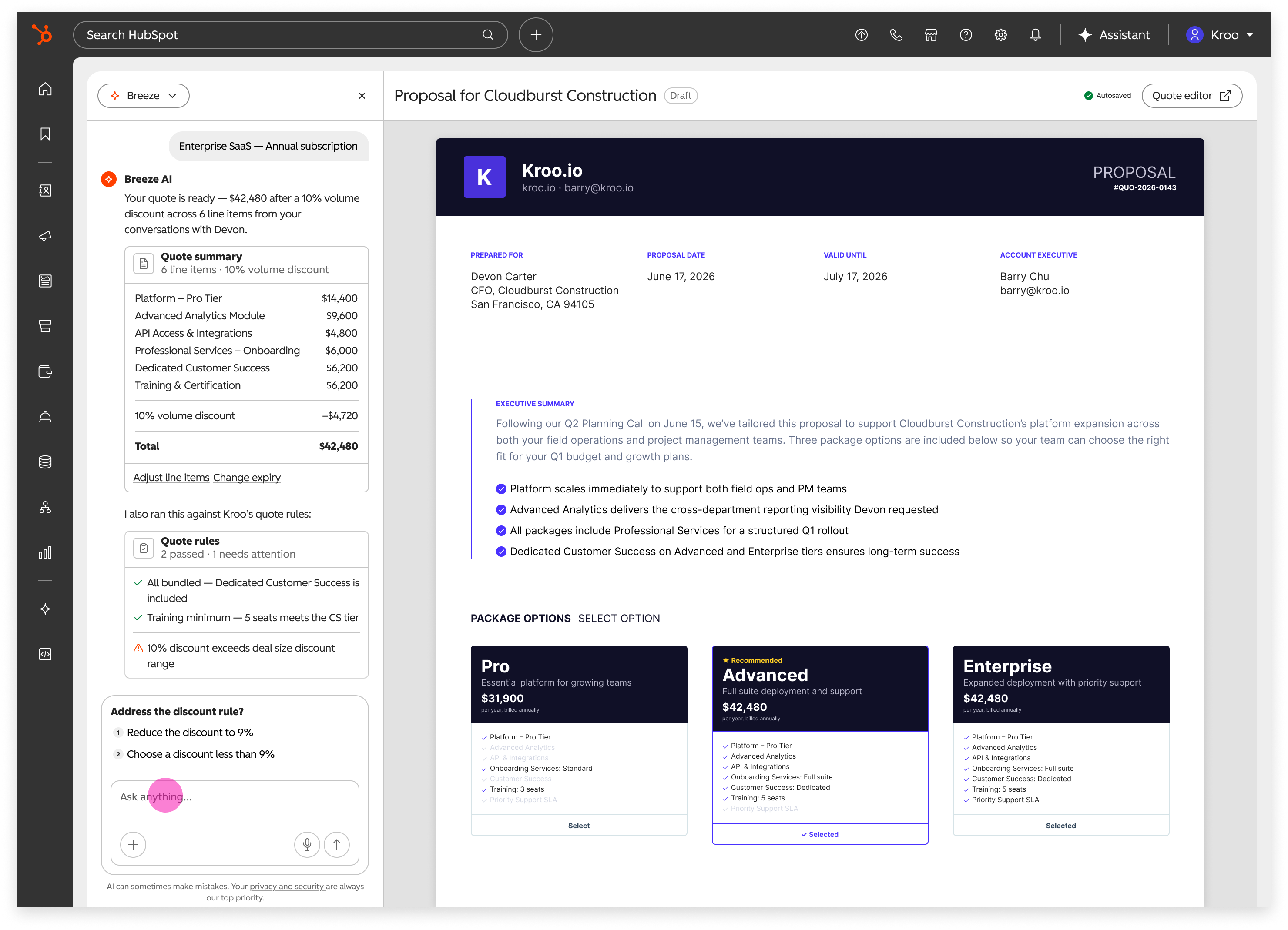
Revenue Hub's new quote editor had friction throughout the seller’s workflow. Sellers were following strict templates to keep their quotes consistent, and they re-entered information that already lived in the HubSpot deal. Enterprise customers relied on quote rules and approvals for pricing, product and legal requirements, but that governance added mental overhead every time a seller built a quote.

‍

‍

The solution

‍

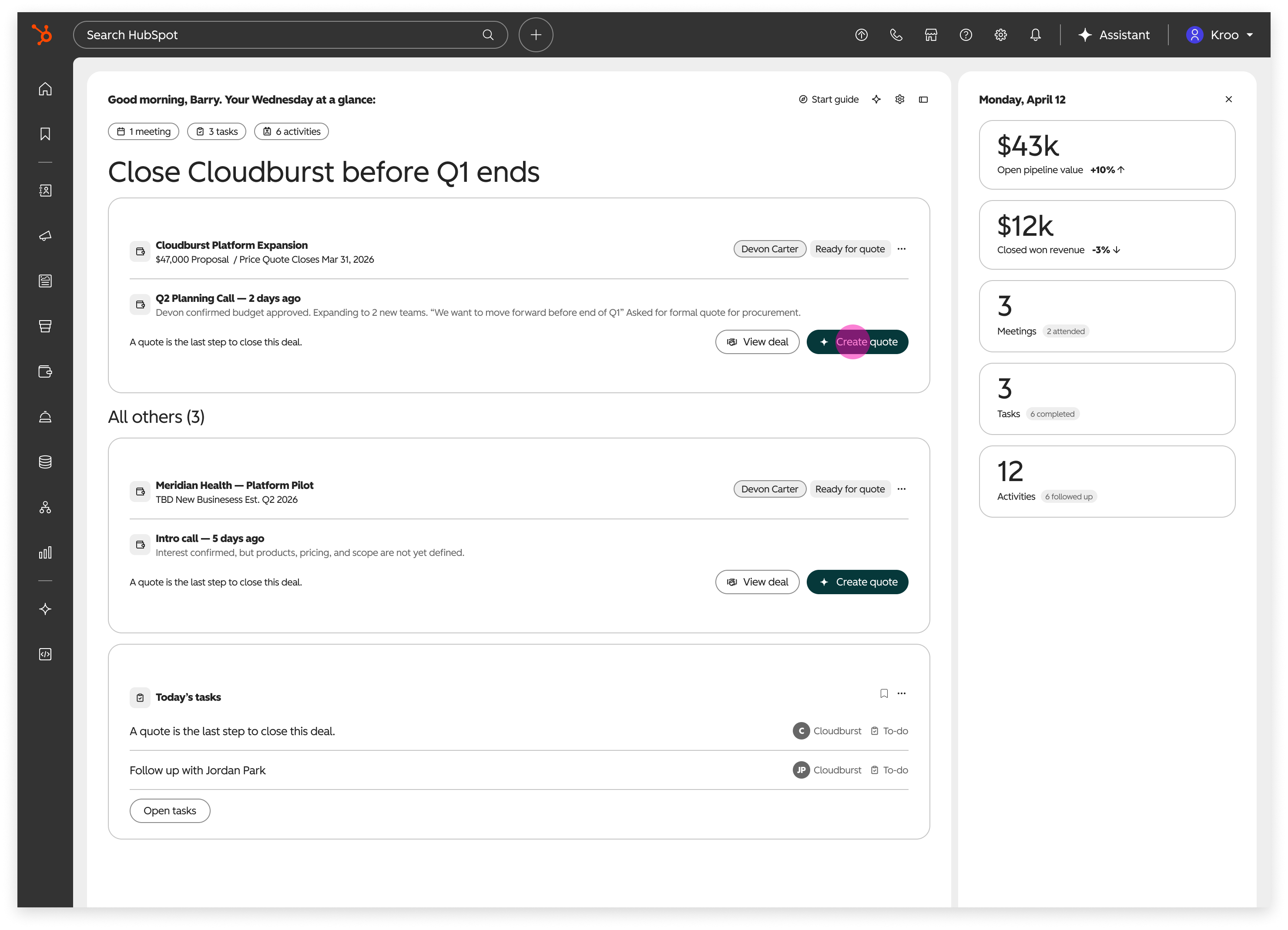
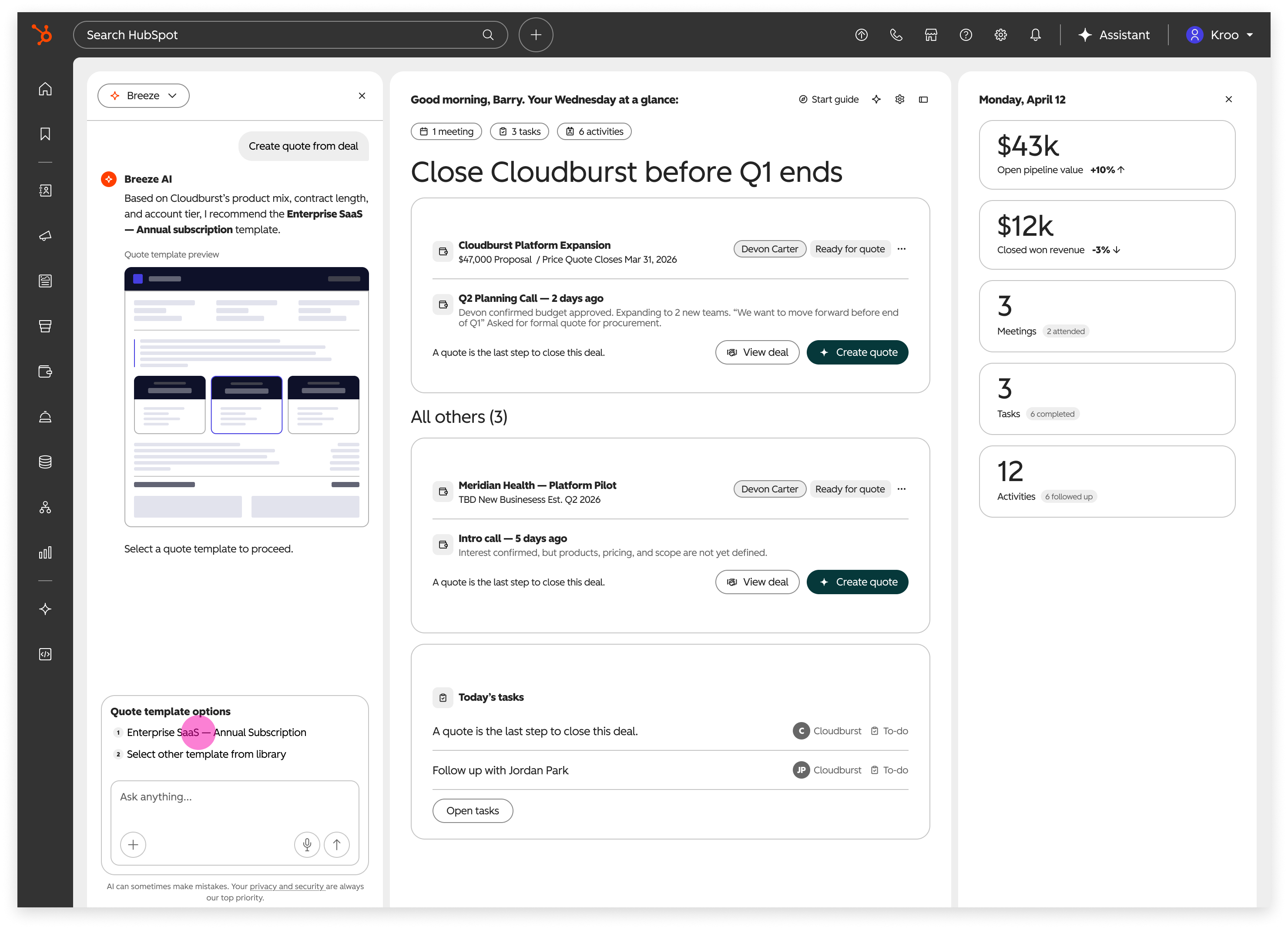
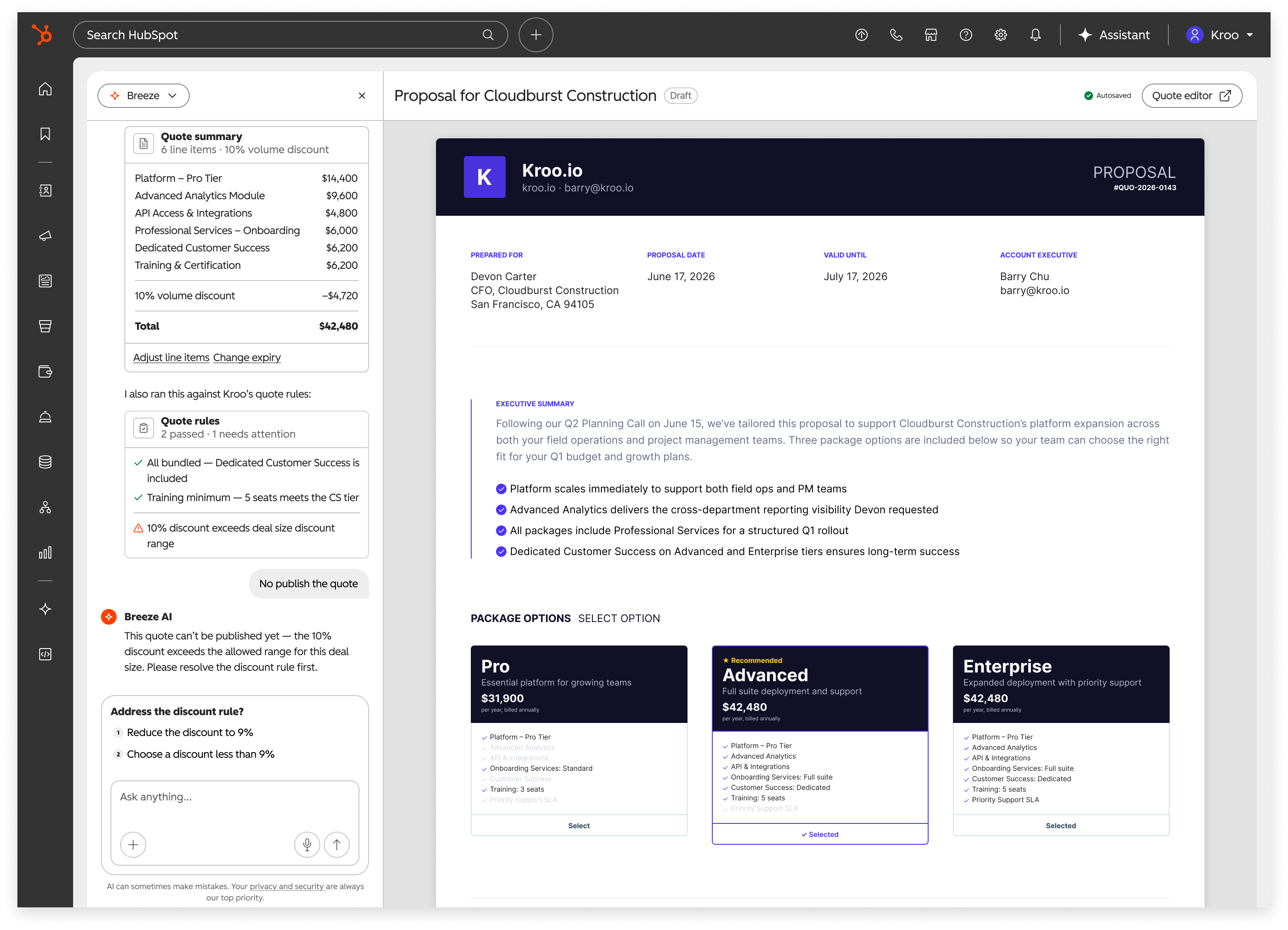
Most of a quote’s content was already in the seller's deal, in both structured and unstructured data. That meant an agent working from the deal, where sellers already spend their time, could draft the quote for them. Sellers’ reliance on templates showed the format was predictable enough to speed up and preselect, and a Breeze AI skill could guide sellers through their company’s rules and approvals instead of leaving them to work it out alone.

‍

‍

What shipped

‍

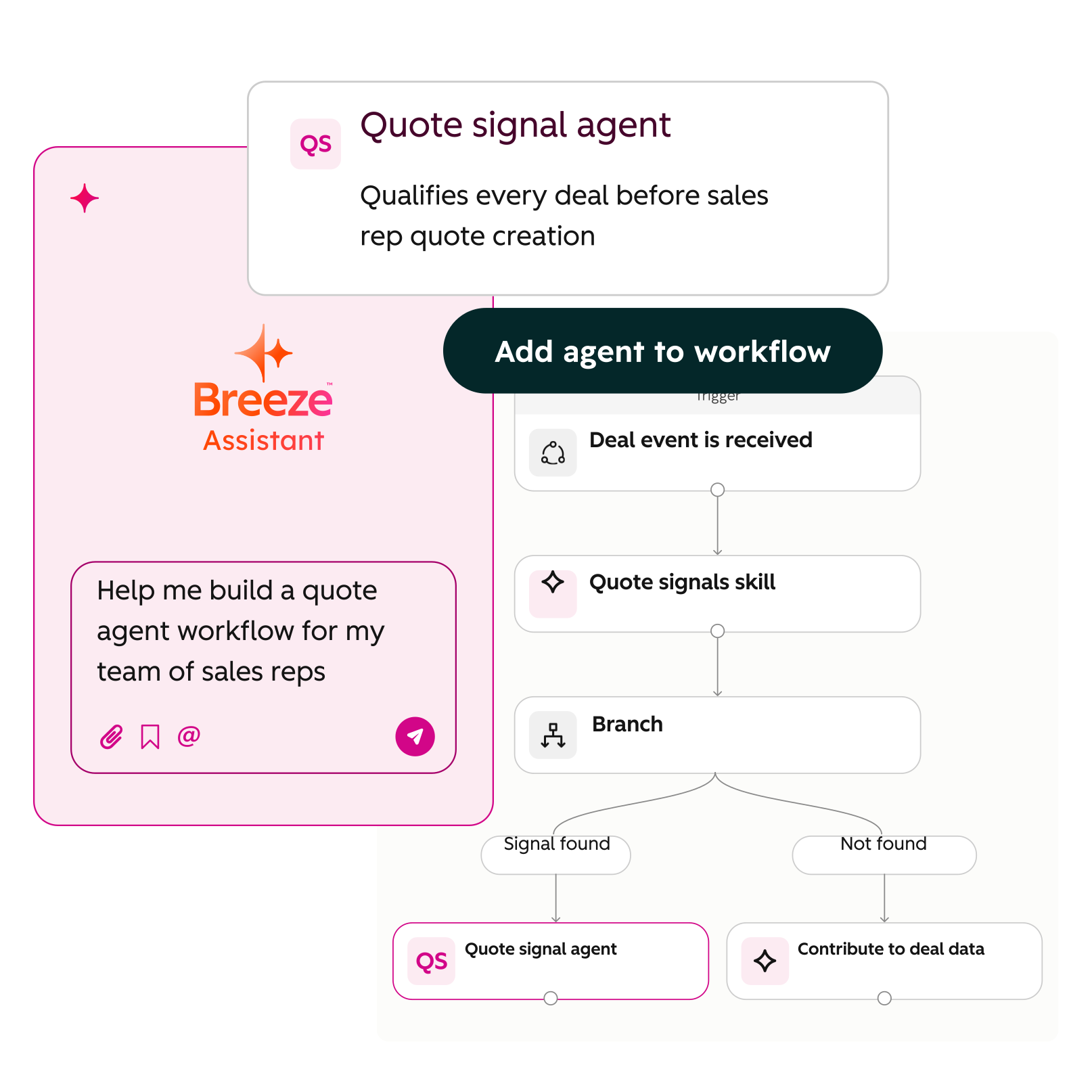
Agent + skill configuration using HubSpot's agent builder platform:
‍

‍

‍

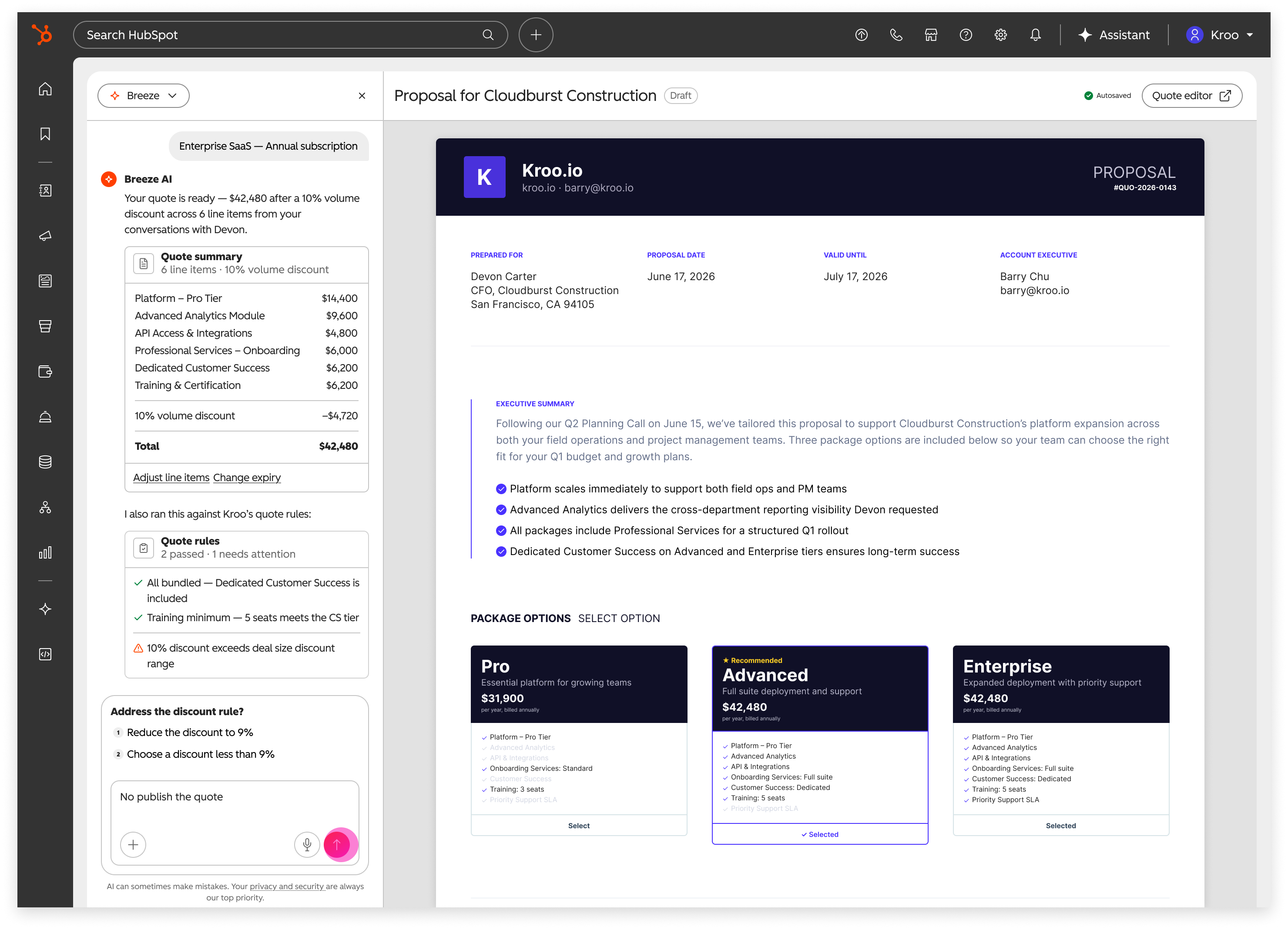
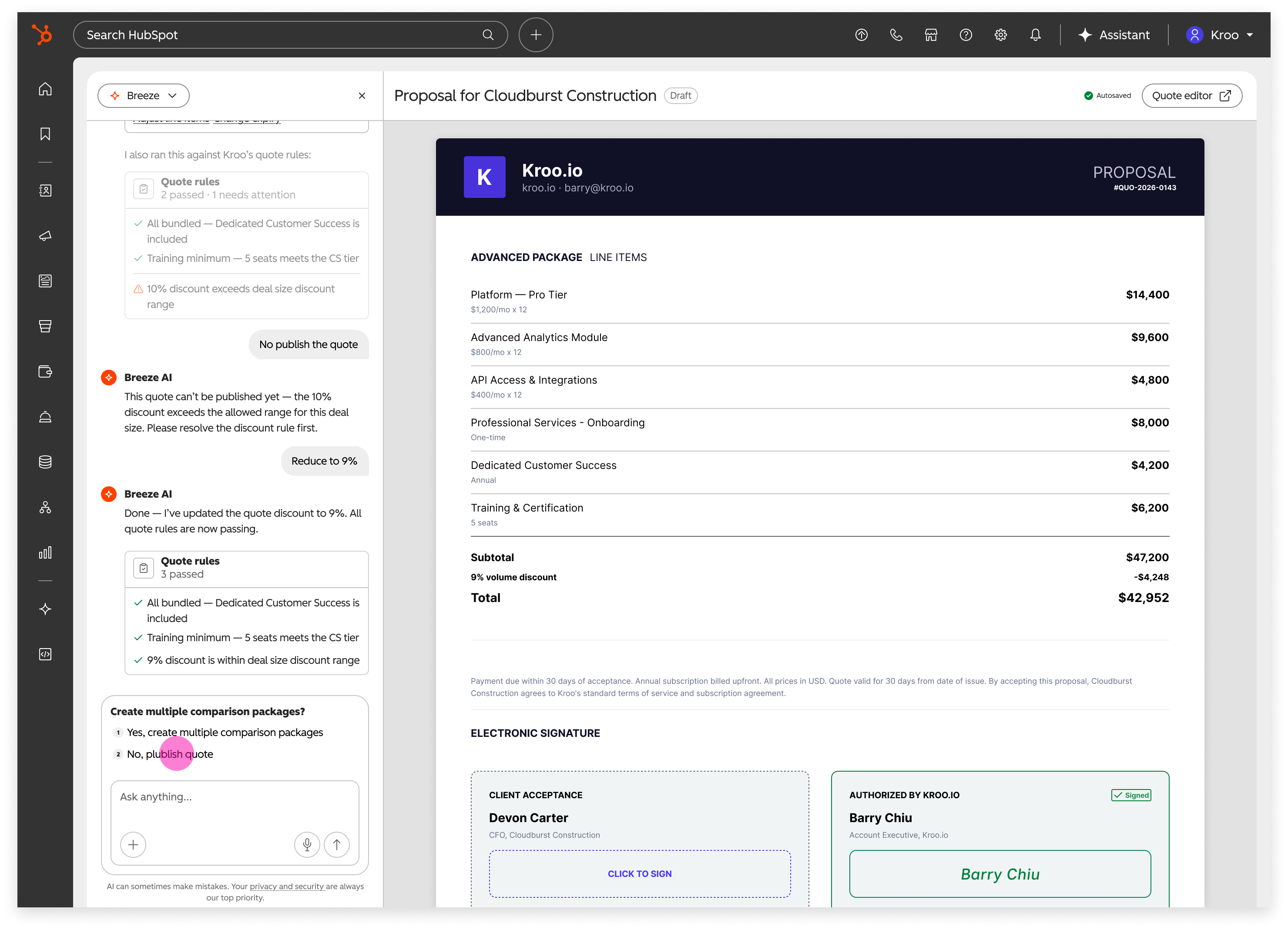
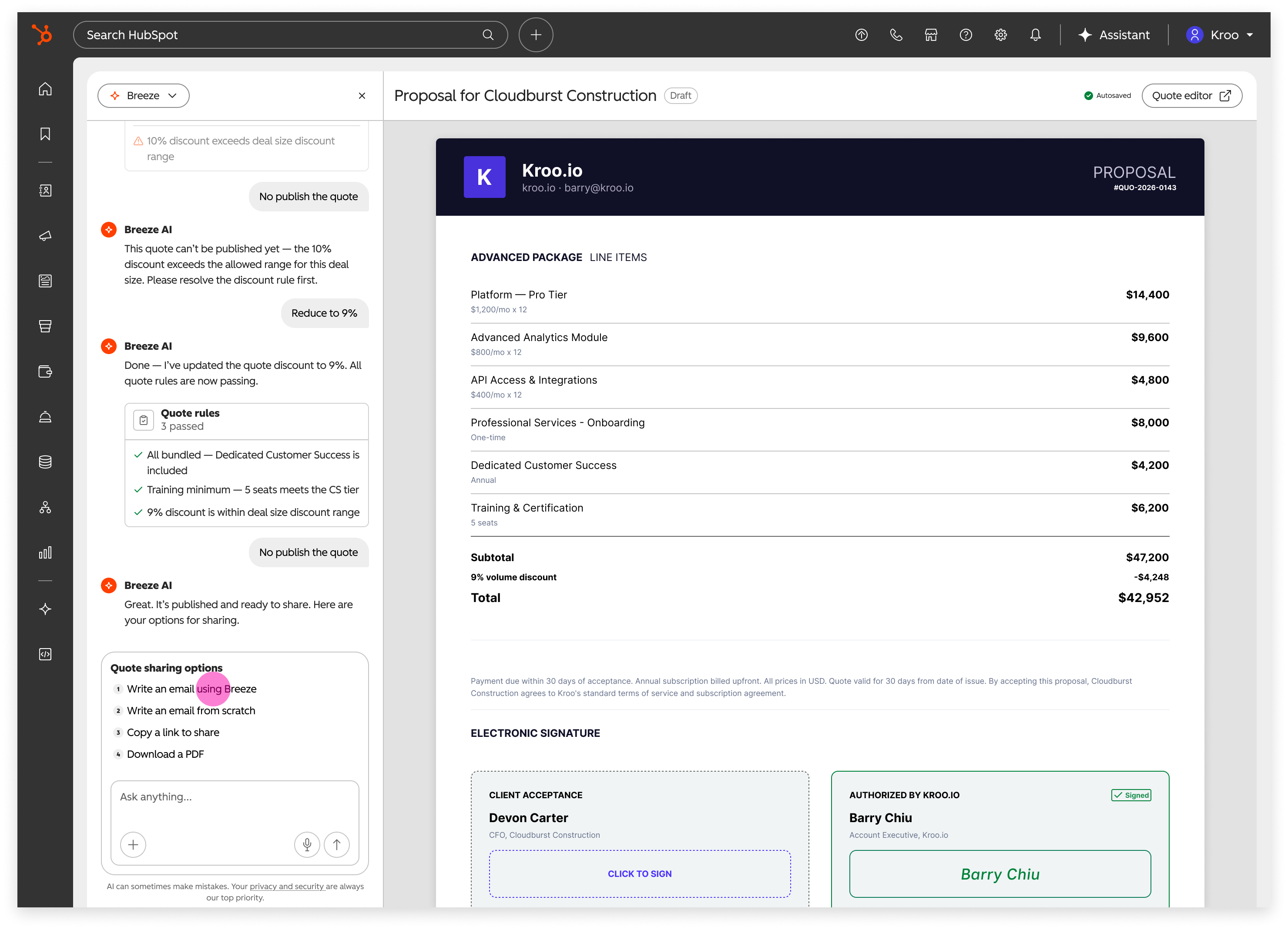
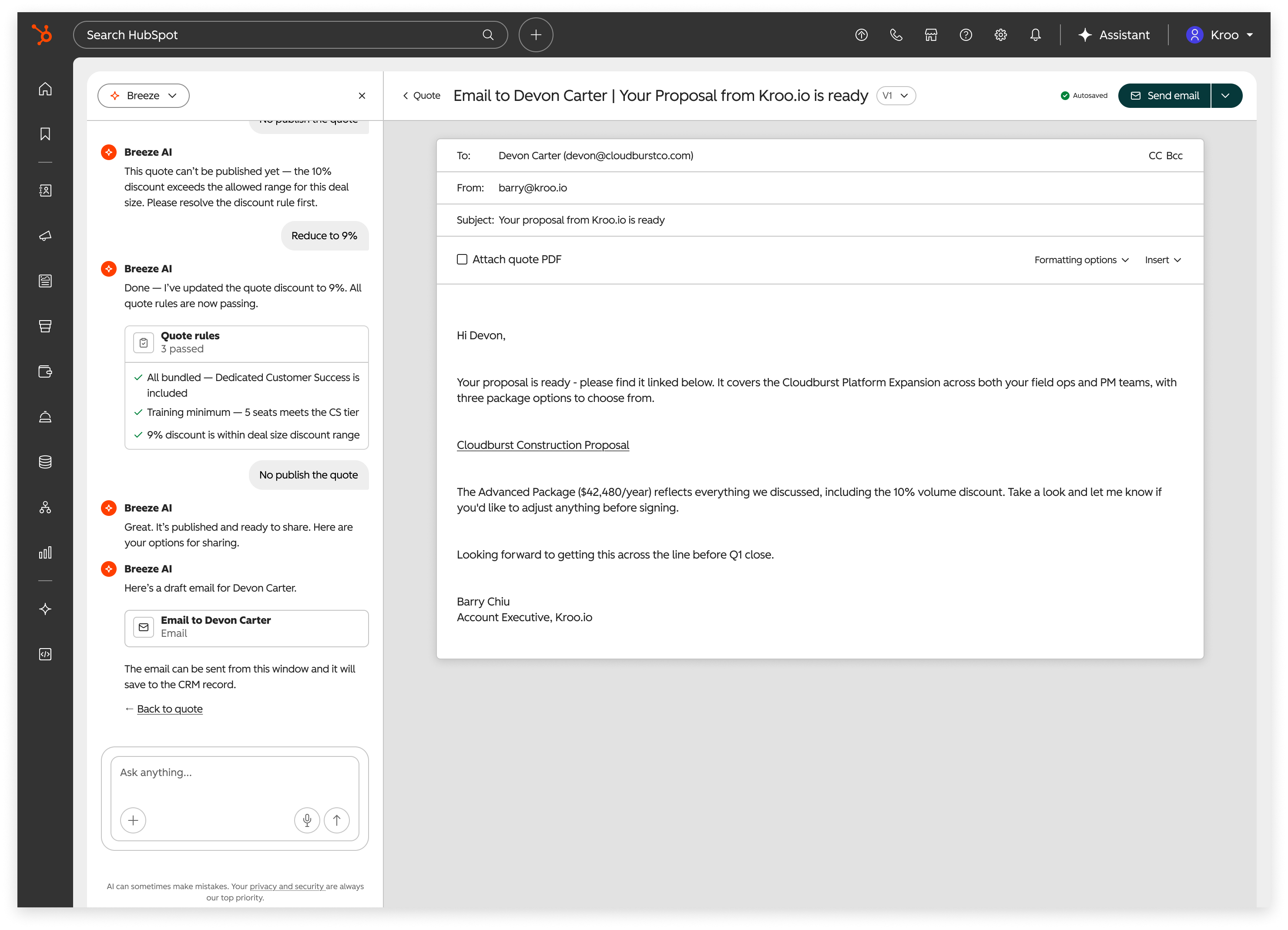
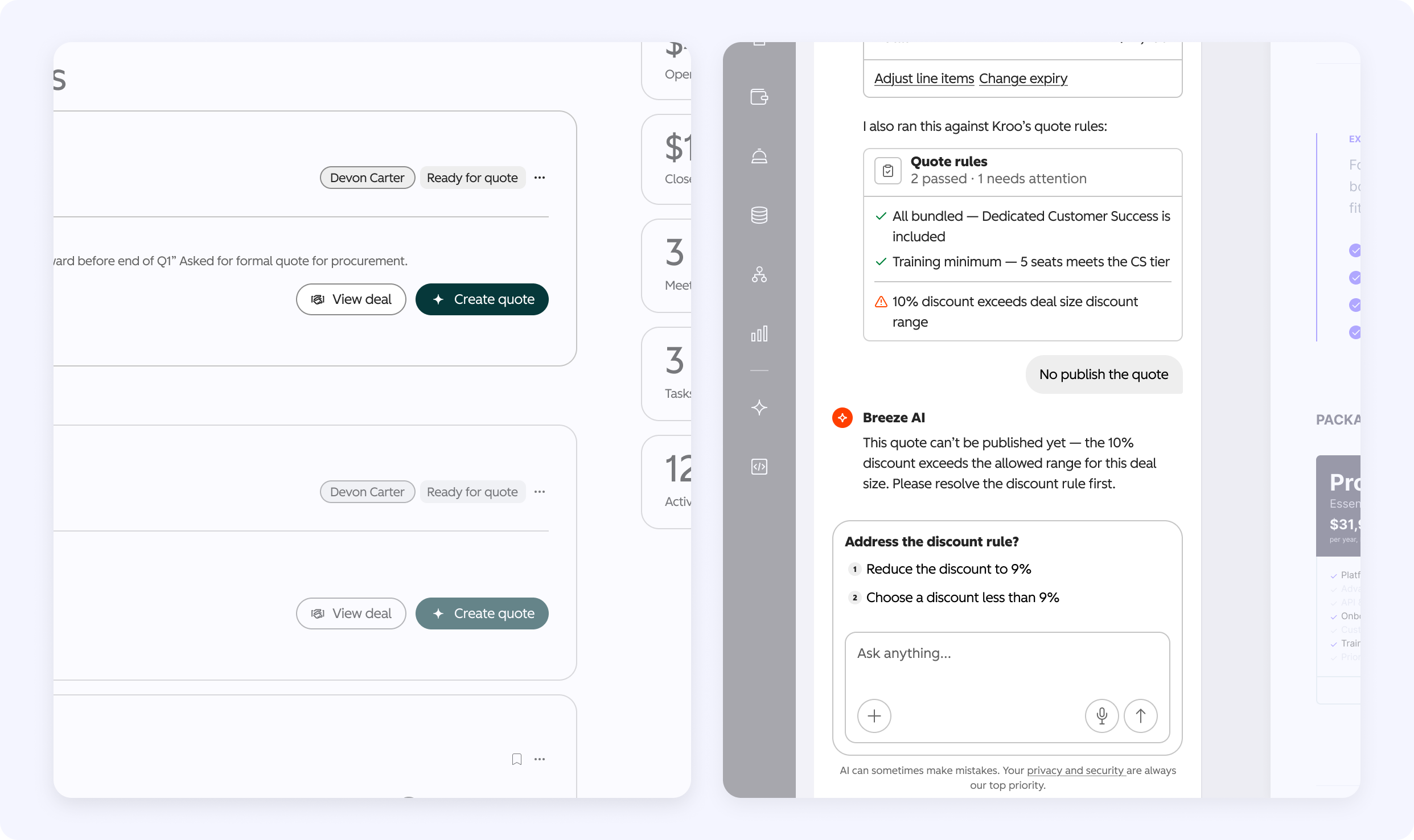
End-to-end quote creation flow

‍

‍

‍

Keys to success & Learnings

  • Tuning the AI skill is a design problem. How the agent reads a deal, which steps it proposes and where it stops to ask are as much a part of the experience as the screens. Design should own that work, not hand it off after the UI is done.
    • The details matter most when AI and agents act for the user. Some steps carry real consequences, like changing a discount or sending a quote to a customer. An agent shouldn’t take those steps without the seller’s say. I mapped where sellers needed to review and confirm, and made those confirmations a required part of the AI skill so sellers stay in control of their quote.
    • Test concepts early, especially ones generated with AI. Early prototypes missed how customers wanted to choose products from their HubSpot product library. Because we tested several concepts with customers early, the fix was a small pivot to a chat-based product picker that matched how they already thought about it.