
I led design on a cross-functional team with PM and engineering, taking quote rules from 0 → 1 through private beta to general availability across specific product SKUs.
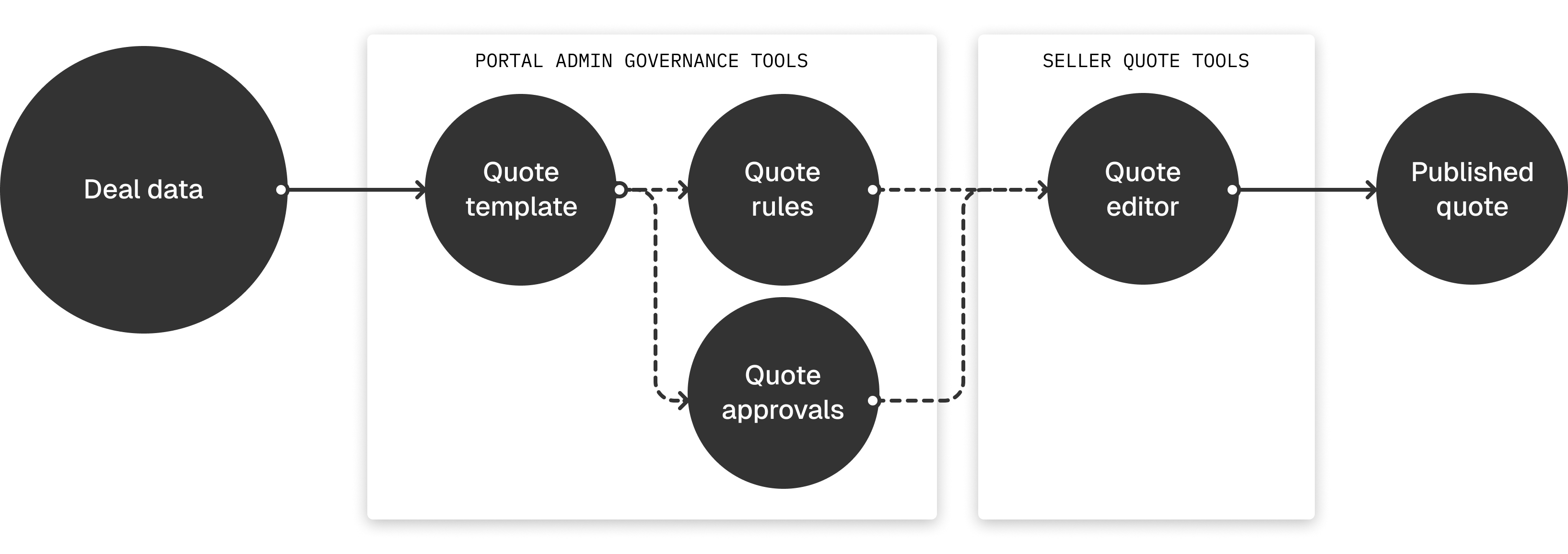
Quote governance and seller workflow:
In-depth competitor audits and interviews with customers provided key insights into their workflows and Jobs-To-Be-Done. Competitors’ offerings being used by customers were a gnarly mess of antiquated UI that was difficult to set up and manage.
Customer interview artifact:
I led a design sprint with other teams’ designers to map the overlap and dependencies across our features. Common jobs, pain points, and existing features were mapped at each stage of the user's experience. This exercise provided the team and executive stakeholders with a solid understanding of the problem space and allowed the team to easily identify opportunities to innovate and influence other teams’ roadmaps.
Cross-team experience mapping artifact:
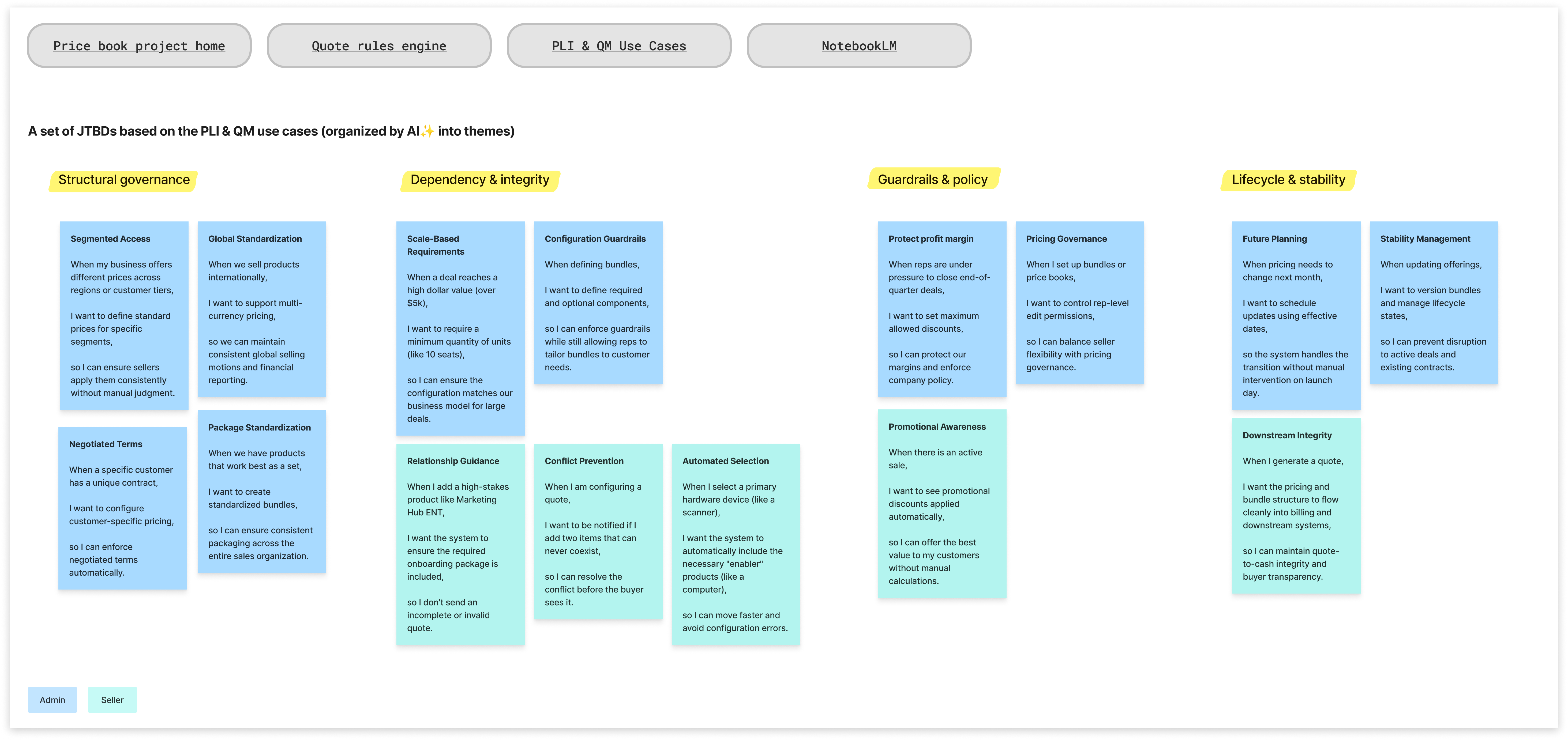
By investigating customers end-to-end quote creation workflows, it was clear that customers needed a quote governance tool that would work across multiple user personas and easily scale across HubSpot's connected CRM platform and object architecture:
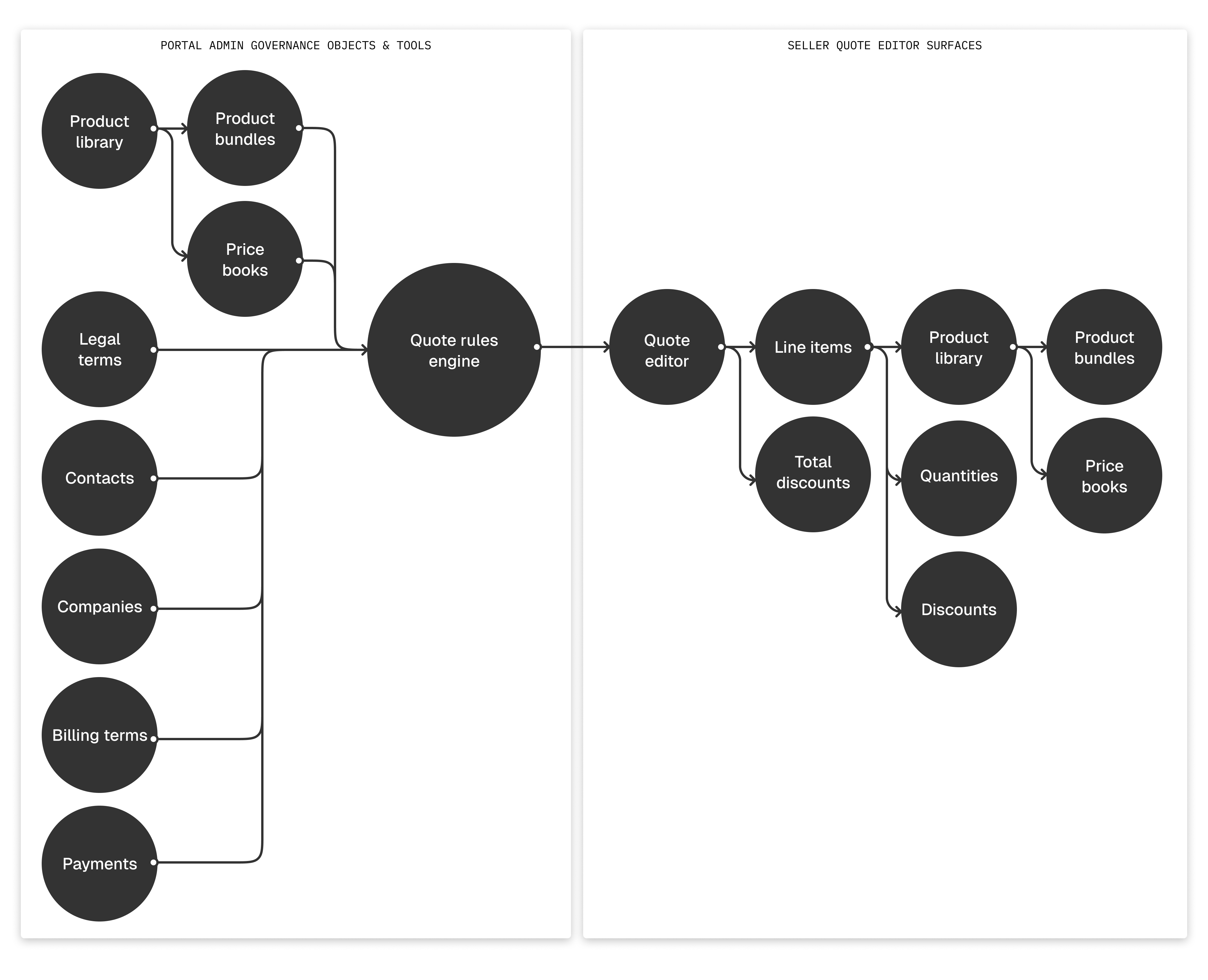
HubSpot Portal Admins
Tools to implement their business strategies that governed their sellers’ quotes with a high level of extensibility, rigor for accuracy within the tool itself, and frictionless setup, all using familiar HubSpot platform standards.
HubSpot Portal Sellers
Real-time guardrails to make accurate decisions when building their quotes — without being encumbered by cognitive overhead that slows down the quote building process. Minimizing the seller's time-to-close with their buyer is imperative.
The customer's quote governance workflow:
Pivoting early
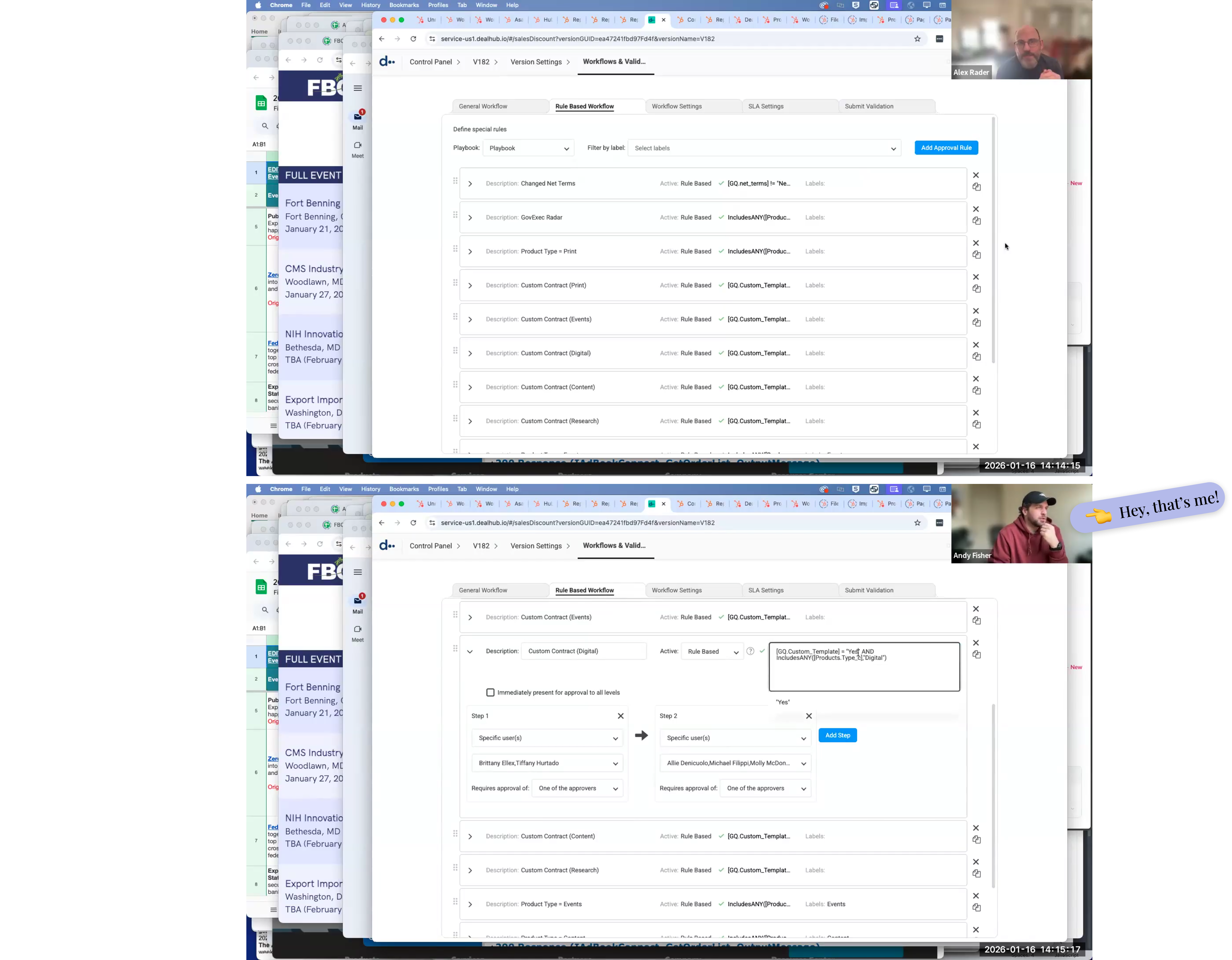
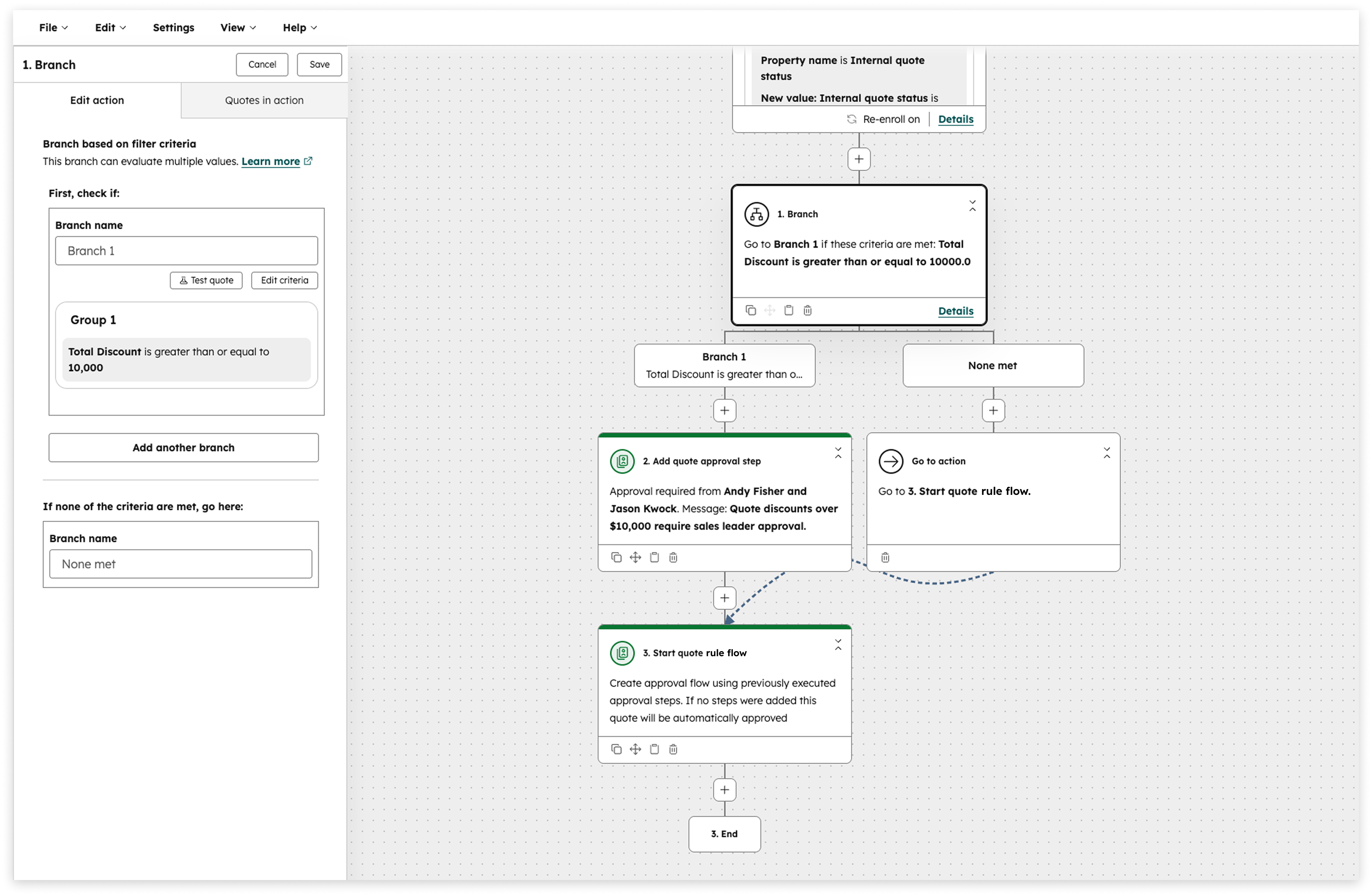
Initial designs had admins build quote rules in HubSpot Workflows, the same conditional logic builder used for other quote governance.
Testing with customers and reviews with our engineering partners showed it wasn’t the right fit. Setting up quote rules was too challenging, even for advanced users.
Setting up and maintaining rule details would be painful using this
This is missing key API access for HubSpot partners like us
AI collaboration with frictionless platform object scalability for admins
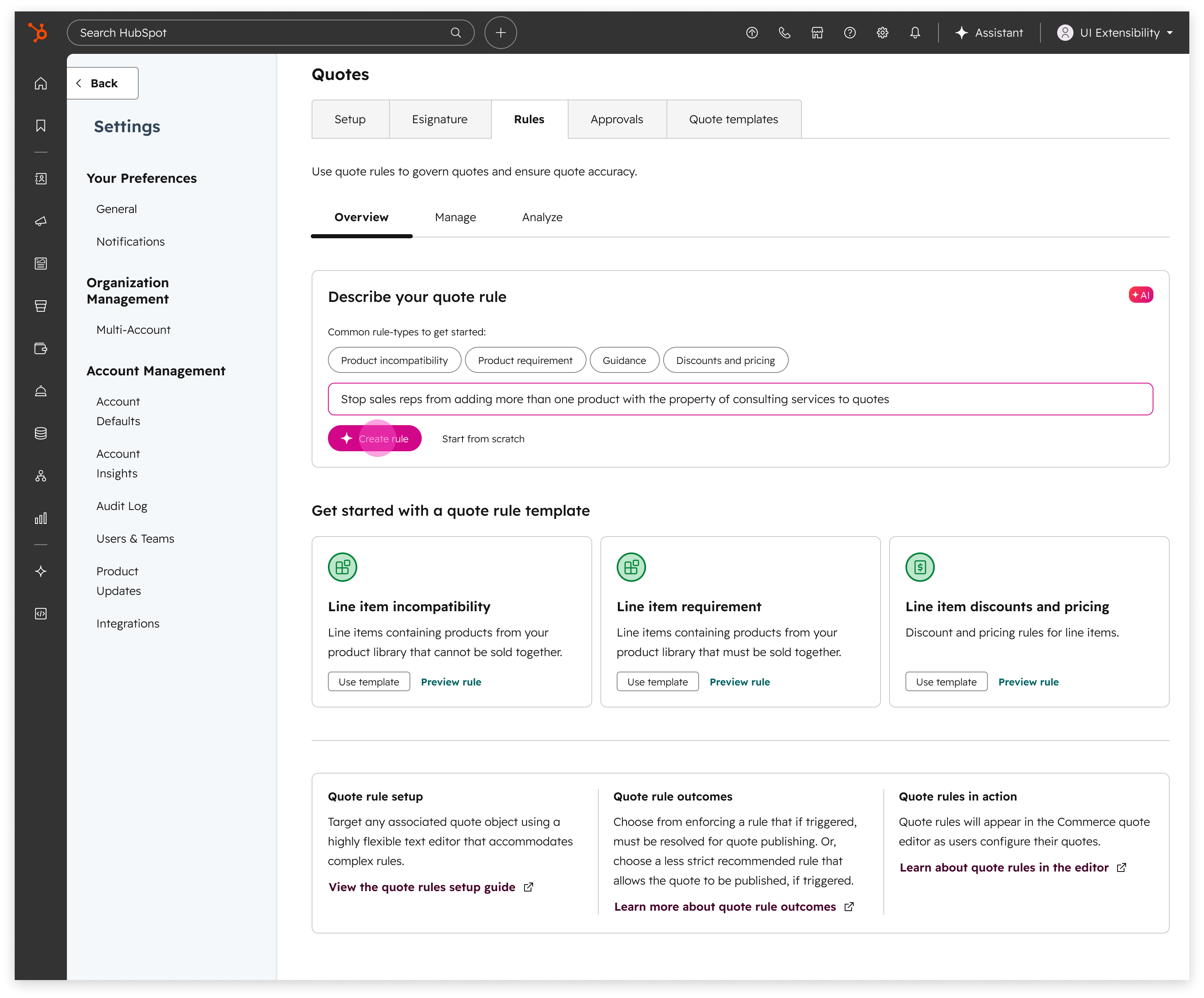
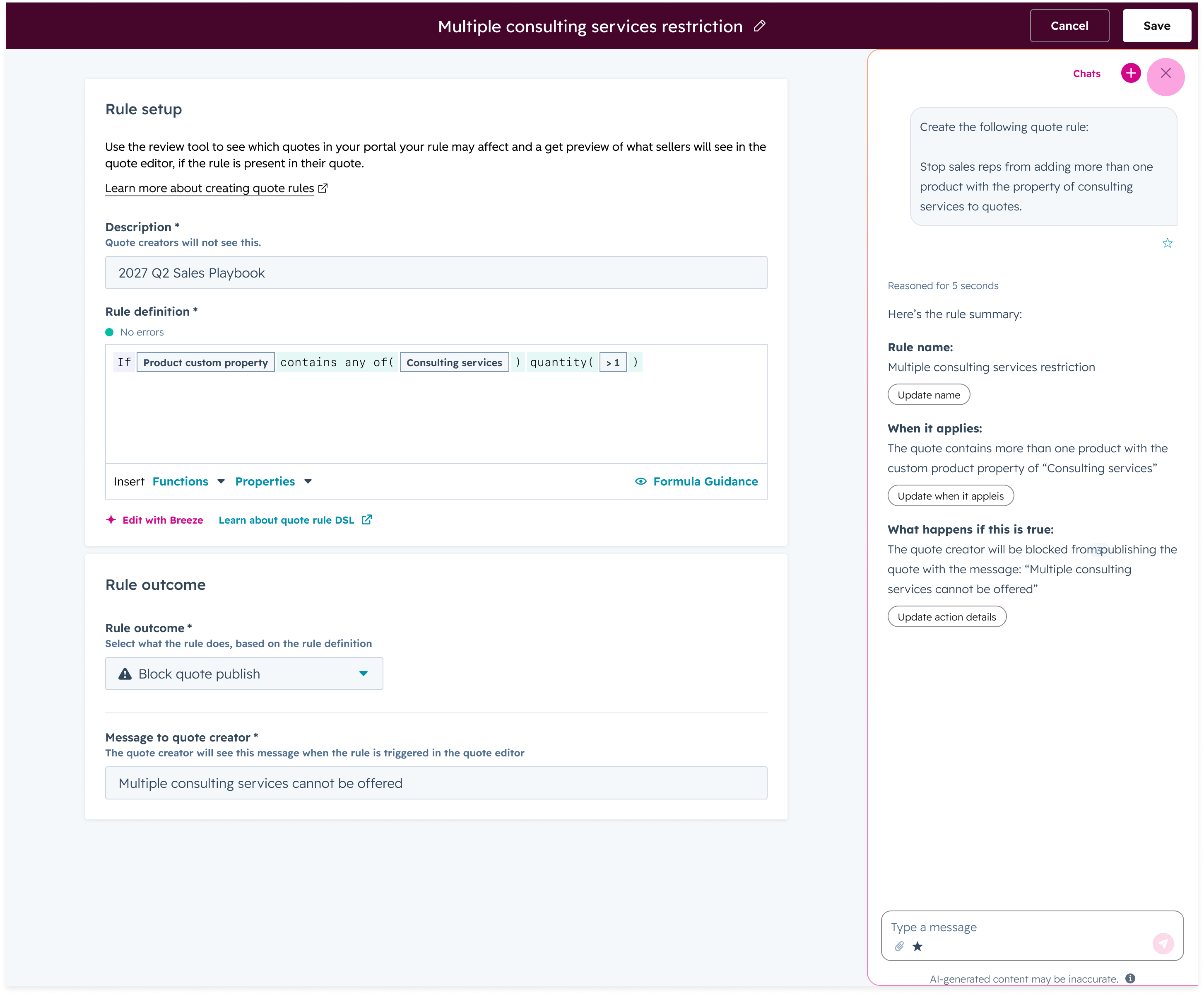
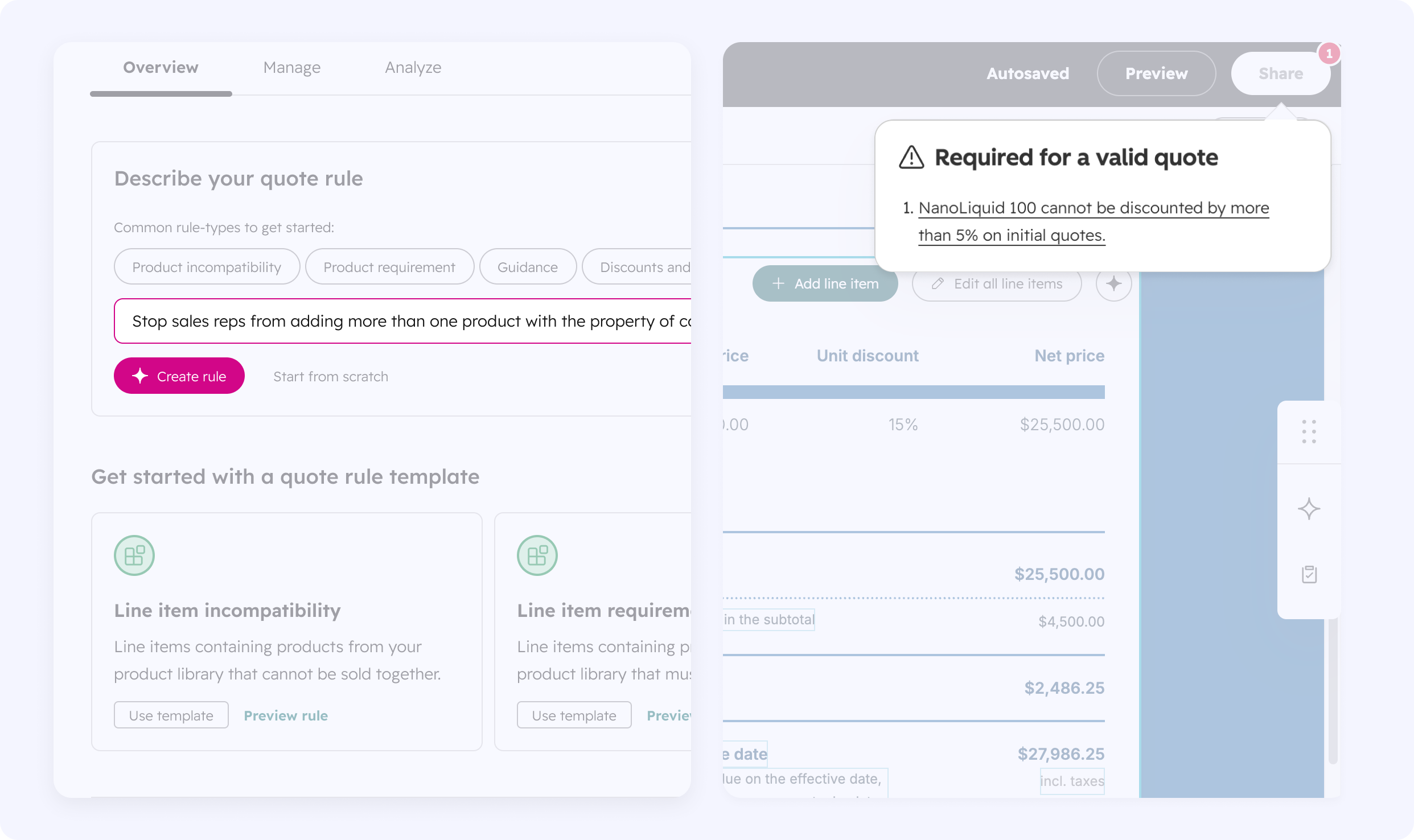
Admins can collaborate with HubSpot Breeze AI to build rules that define their business' guardrails and drive greater success in their reps closing deals with their quotes.
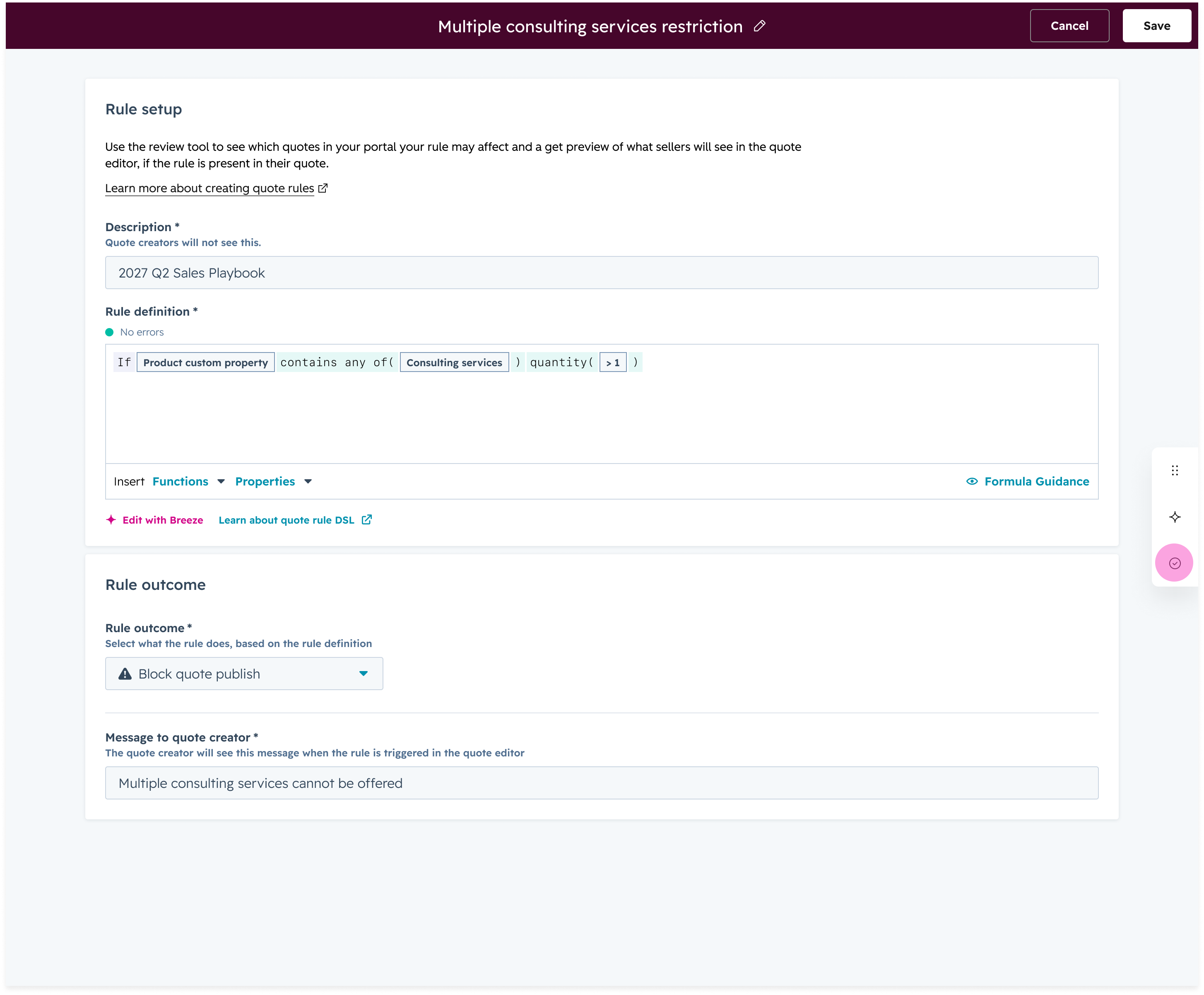
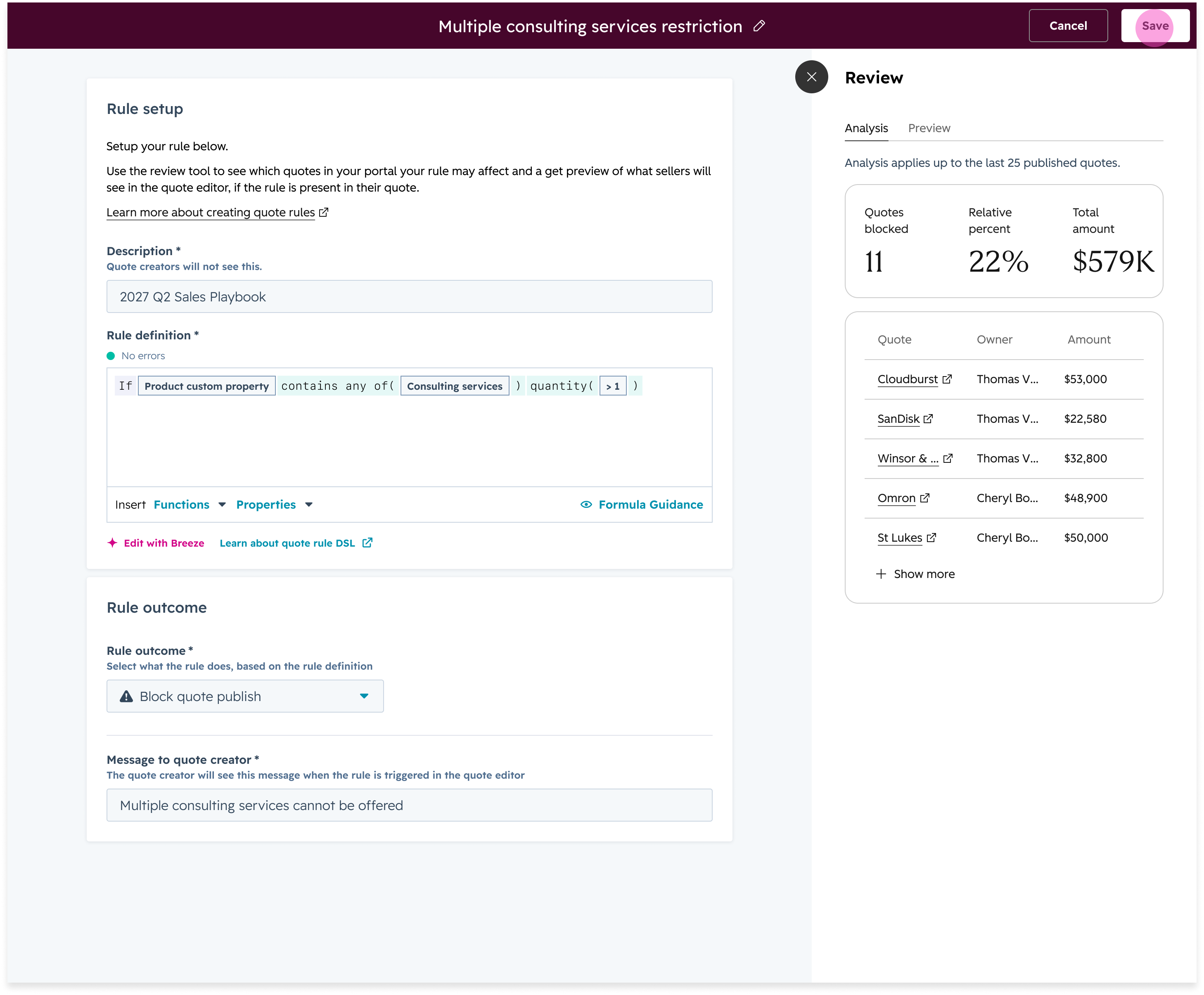
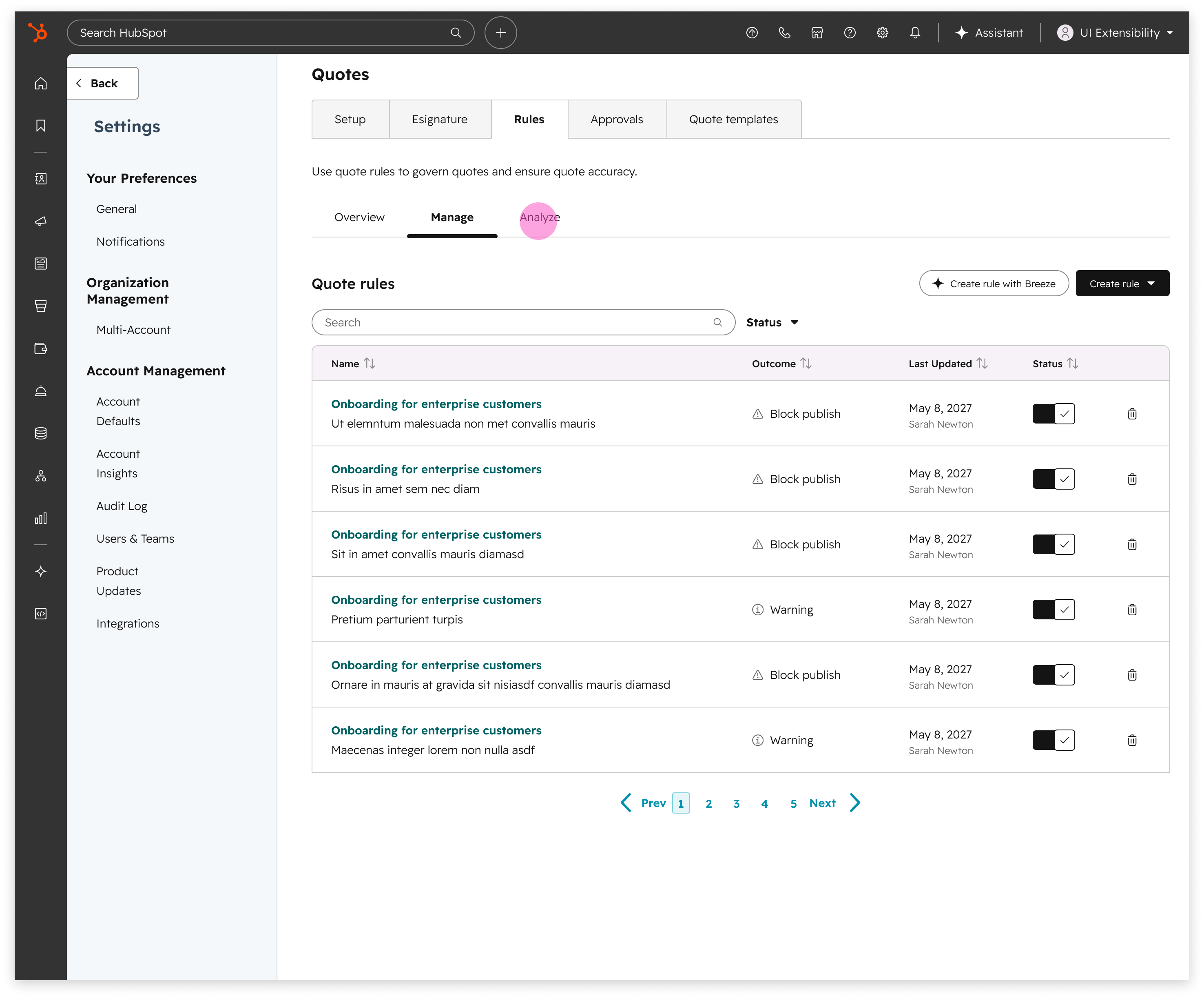
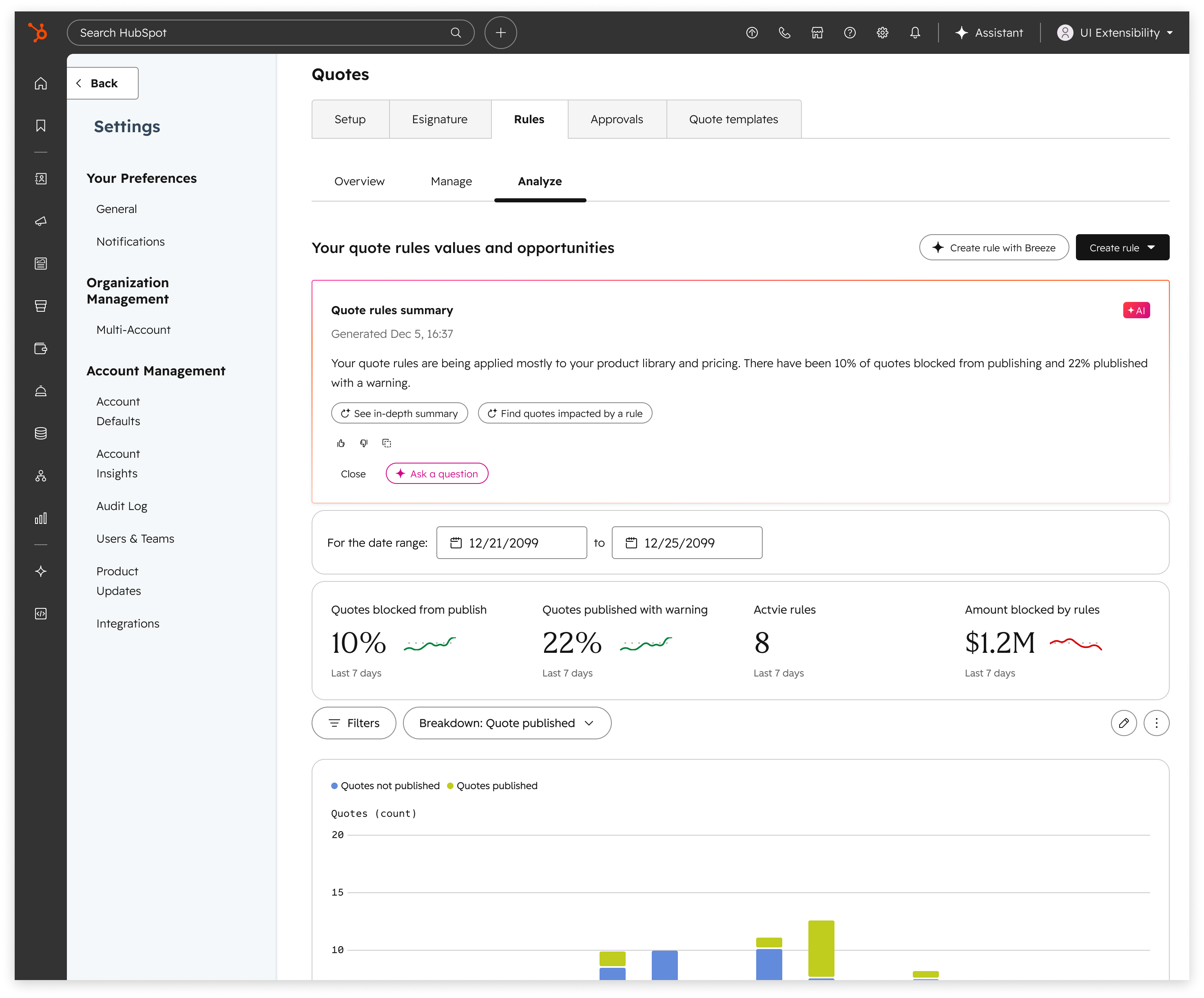
Combined with the commonly used HubSpot platform DSL (domain-specific language) editor, admins are able to effortlessly build and refine their quote rules, manage them, and analyze them.
Admin quote rule setup:
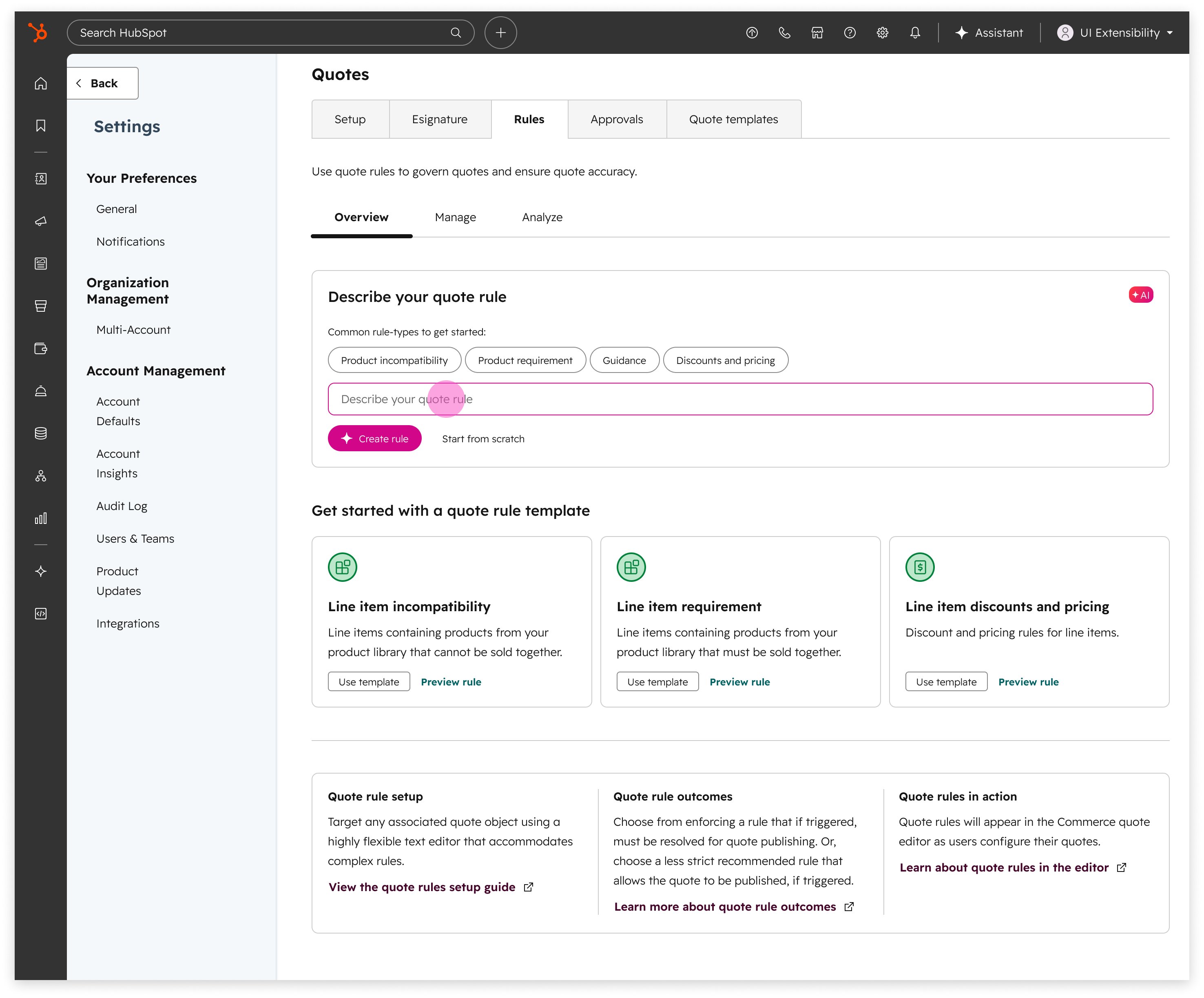
The design purposefully prioritized the Breeze AI describe to create action
Image 1 of 7
Realtime quote editor rules for sellers to easily build accurate quotes
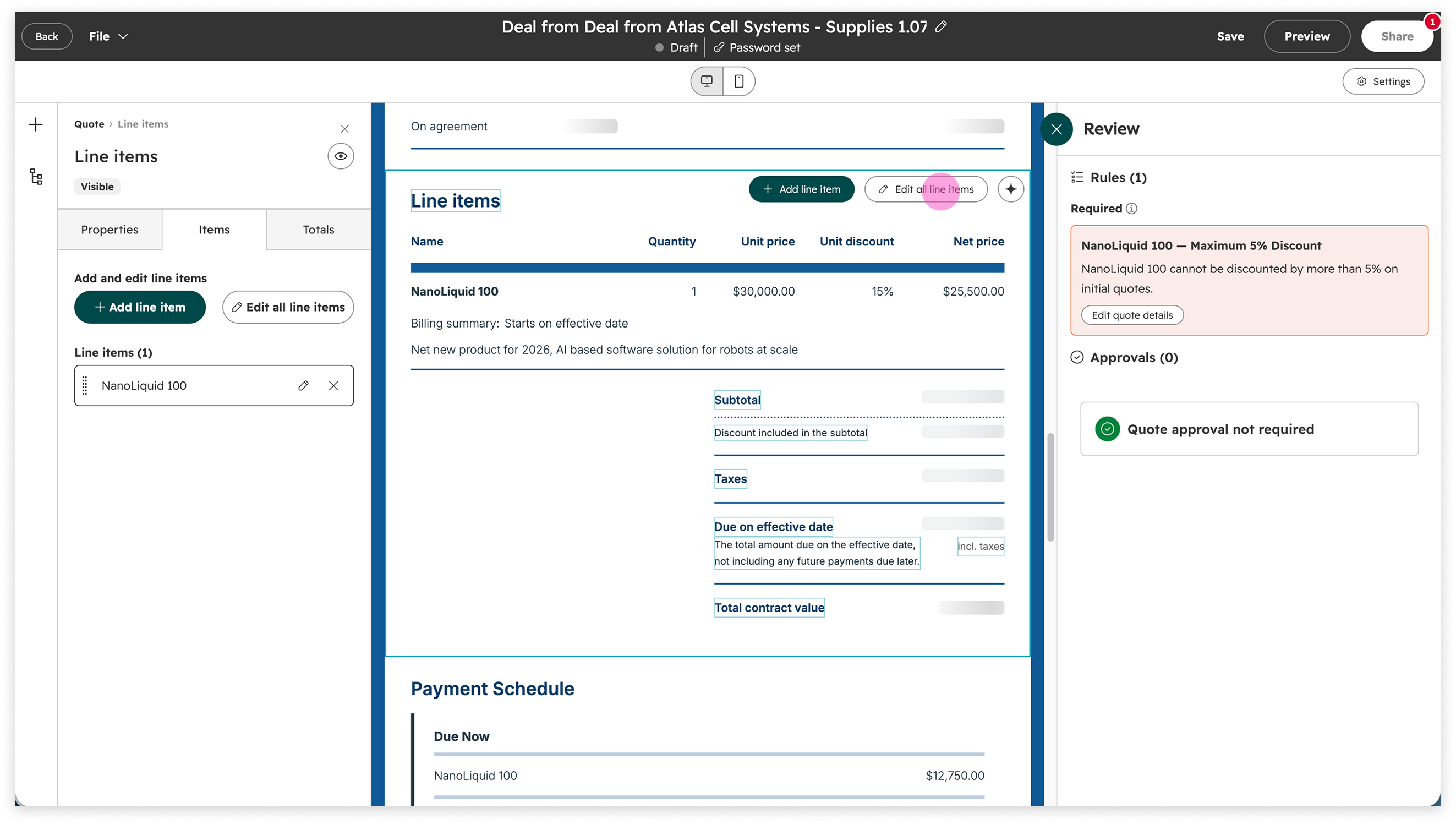
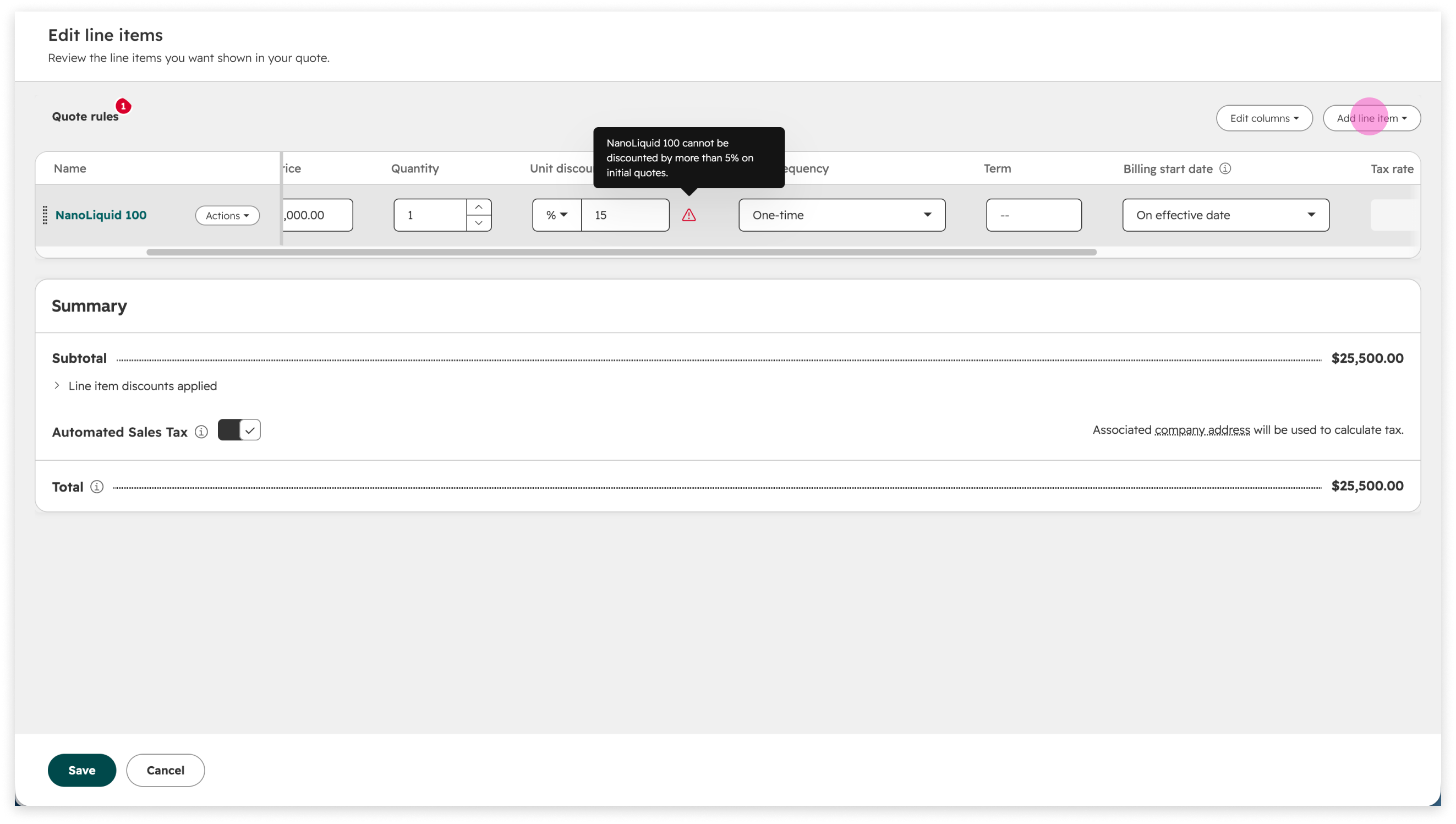
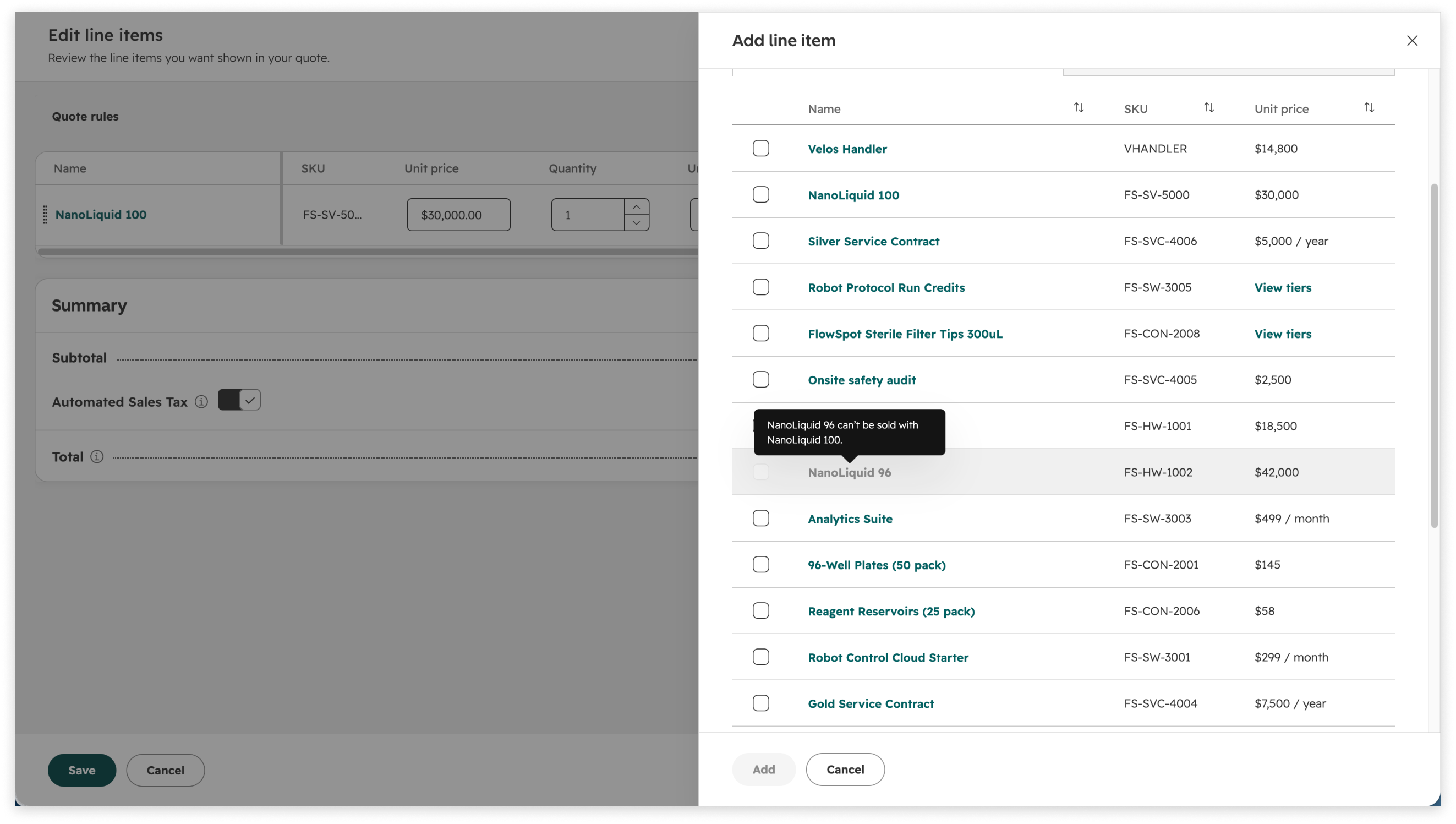
The seller's UX in the quote editor gives them smart, contextually aware guardrails to confidently build their quote through real-time guided rules interactions throughout the quote editor's complex surfaces.
Rules in the quote editor:
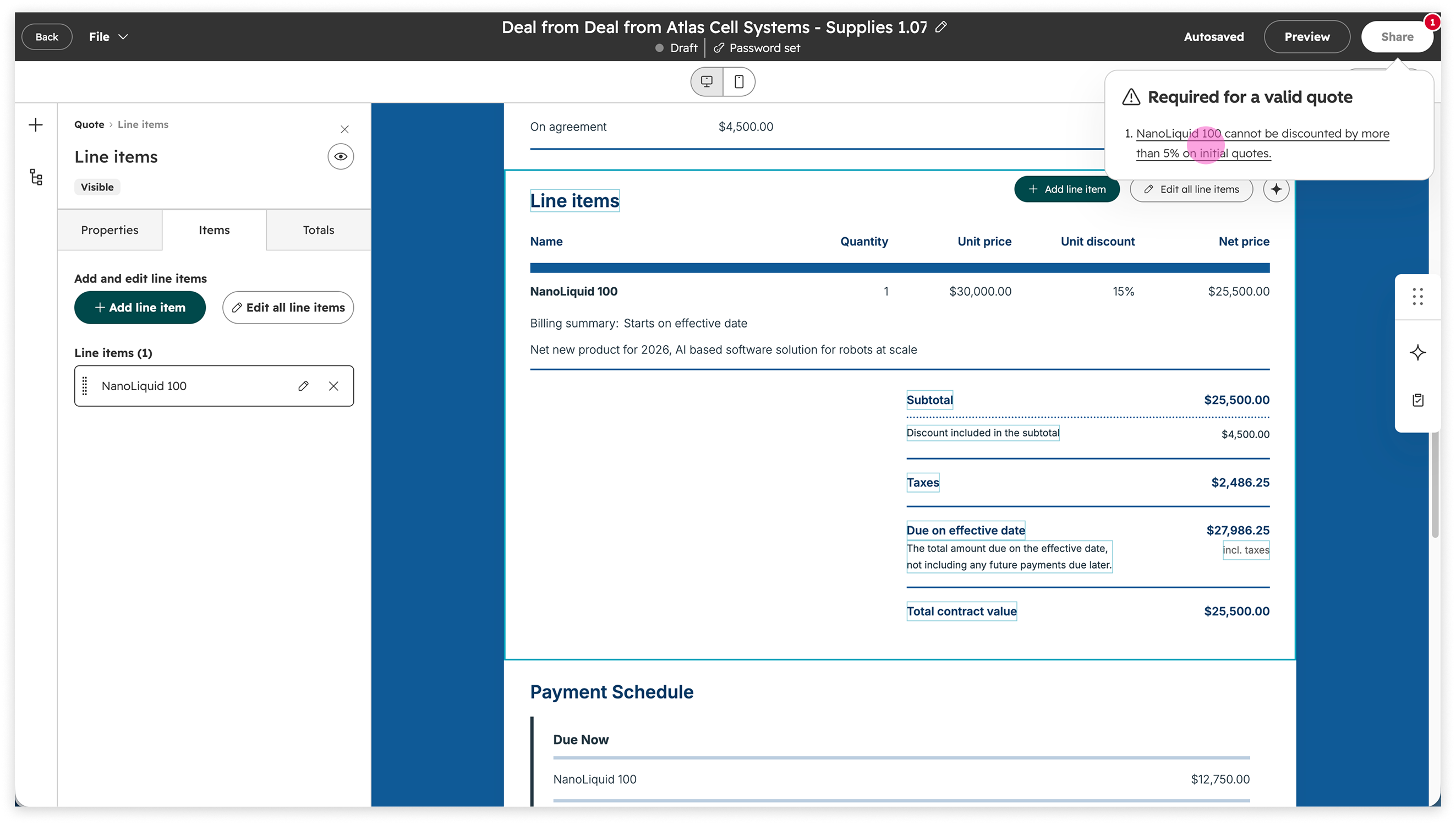
Quote editor validations ensure that only accurate quotes are published
Image 1 of 4